Tracing Terroir Signals Through Altitude Shifts in Carnuntum and Neusiedlersee Vineyards
Casey Peters · Aug 21, 2026
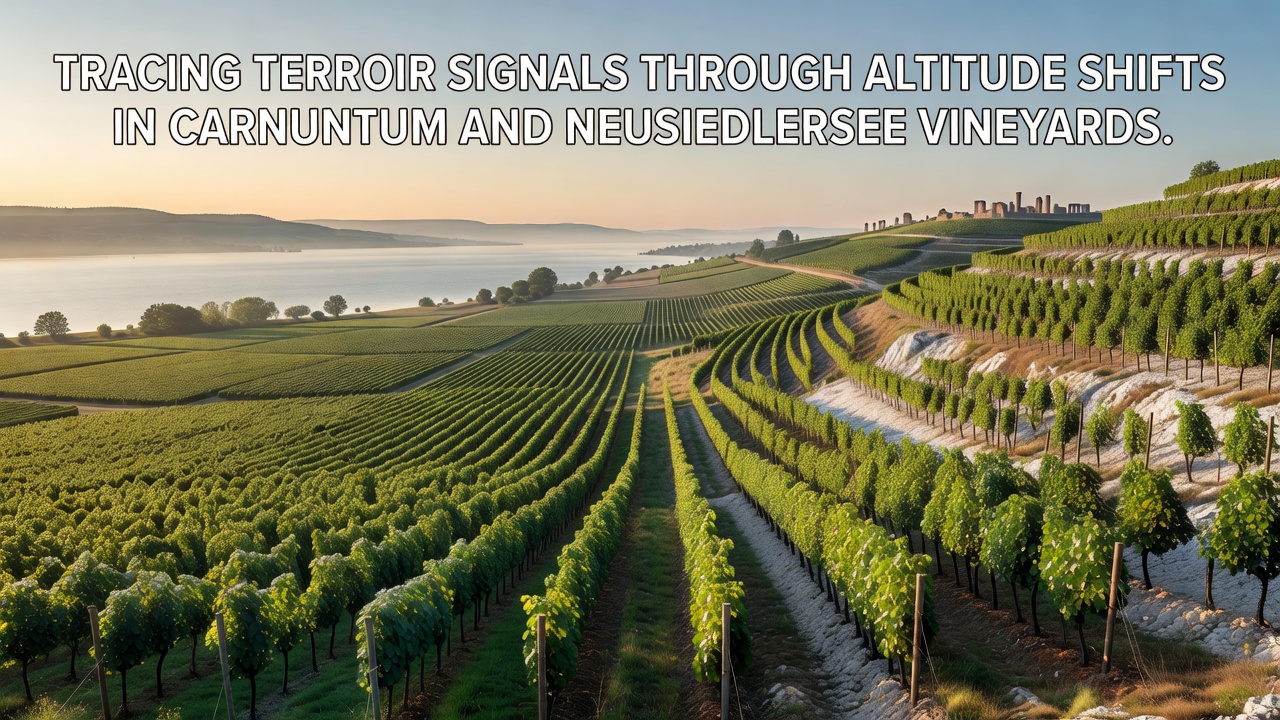
Tracing Terroir Signals Through Altitude Shifts in Carnuntum and Neusiedlersee Vineyards
Altitude variations shape the expression of terroir across the Carnuntum and Neusiedlersee regions where elevations range from near lake level up to several hundred meters on the surrounding hills. These shifts influence temperature gradients, sunlight exposure, and soil drainage patterns that affect grape development in varieties such as Zweigelt, Blaufränkisch, and Grüner Veltliner. Data from regional monitoring stations indicate that each 100-meter increase in elevation typically reduces average growing season temperatures by about 0.6 degrees Celsius while increasing diurnal temperature swings.
Researchers at the University of Natural Resources and Life Sciences Vienna have mapped these patterns through soil sampling and microclimate sensors placed at multiple sites. Their findings show that lower terraces in Neusiedlersee retain more heat due to proximity to the shallow lake which moderates nighttime cooling yet higher slopes in Carnuntum promote earlier phenolic ripening in red grapes because of better air drainage and reduced humidity. Such differences appear consistently across vintages from 2018 through 2024 with measurable impacts on acidity levels and tannin structure.
Geographic Layout and Elevation Profiles
Carnuntum sits between the Danube and the Leitha Mountains where vineyard parcels climb from 150 meters near the river to over 300 meters on south-facing slopes while Neusiedlersee vineyards spread around the lake basin with gentle rises toward the Parndorf Plateau reaching similar heights. Soil composition changes with altitude as well; alluvial deposits dominate lower zones whereas loess and limestone fragments increase at higher positions creating varied water retention capacities that influence vine stress responses during dry periods.
Observers note that these layered landscapes produce distinct flavor precursors in the same grape variety when grown at different elevations within a single estate. Studies tracking berry composition across transects reveal that fruit from upper sites often carries higher malic acid concentrations at harvest which contributes to brighter acidity in finished wines compared with riper profiles from valley floors.
Impact on Grape Physiology and Wine Chemistry
Altitude-driven temperature differences alter the timing of veraison and harvest windows by up to two weeks between low and high parcels in both regions. This staggered development allows producers to manage picking sequences that capture a range of ripeness stages within one vintage. Chemical analyses conducted by the Austrian Federal Institute for Viticulture demonstrate corresponding shifts in anthocyanin accumulation and volatile compound profiles with higher altitude samples showing elevated levels of certain pyrazines that translate into herbal and spicy notes in the resulting wines.
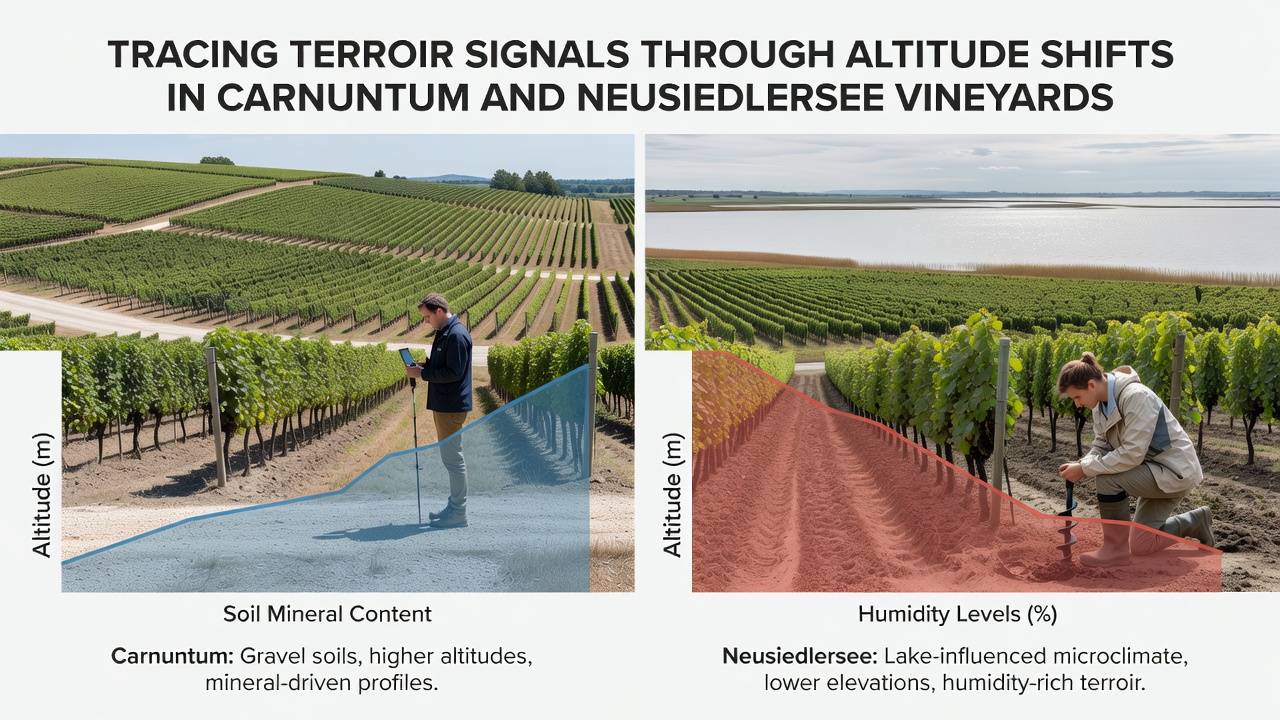
Harvest records from 2020 to 2025 further illustrate how late-summer heatwaves affect lower sites more intensely while upper elevations maintain more stable conditions due to increased wind exposure. These patterns matter for wine balance because cooler nights at height preserve freshness in white varieties and prevent over-extraction of color in reds during extended skin contact. According to findings published by the International Organisation of Vine and Wine such elevation effects form a recognized component of terroir mapping in Central European growing areas.
Varietal Responses Across Elevations
Blaufränkisch planted on the higher reaches of Carnuntum tends toward firmer structure and slower tannin polymerization whereas the same variety near lake level develops softer mouthfeel and earlier approachability. Grüner Veltliner follows a parallel trajectory with upper parcels yielding wines that retain more peppery aromatics through bottle aging. Data collected during the 2025 vintage confirmed these trends across multiple estates with statistical significance in blind sensory panels conducted by independent laboratories.
Climate records indicate that August 2026 will feature continued monitoring of these altitude gradients as part of an ongoing EU-funded project tracking adaptation strategies across Austrian wine regions. The initiative combines satellite imagery with ground sensors to refine predictive models for future growing seasons and supports decisions on site selection for new plantings.
Research Methods and Data Collection
Teams employ portable spectrometers and sap flow sensors to capture real-time physiological responses at different elevations while laboratory assays quantify differences in sugar loading and acid metabolism. One long-term trial in Neusiedlersee compared identical clones on adjacent parcels separated by 120 meters of elevation and documented consistent divergence in pH and potassium uptake. Similar protocols applied in Carnuntum have produced comparable datasets that researchers now integrate into regional terroir databases.
These measurements align with broader viticultural observations reported by the Australian Wine Research Institute which has examined elevation effects in comparable cool-climate settings and identified parallel influences on phenolic maturity. Cross-regional comparisons help isolate the specific contributions of local geology from broader climatic drivers.
Conclusion
Altitude shifts in Carnuntum and Neusiedlersee vineyards generate measurable variations in grape chemistry and wine style that reflect interactions between topography, soil, and climate. Ongoing data collection through 2026 continues to refine understanding of these signals and supports precise vineyard management across elevation gradients. The patterns documented to date provide a factual basis for tracing terroir expression without reliance on subjective descriptors.