How the Danube Shapes Flavor Profiles in Wachau, Kremstal, and Kamptal Vineyards
Casey Peters · Aug 19, 2026
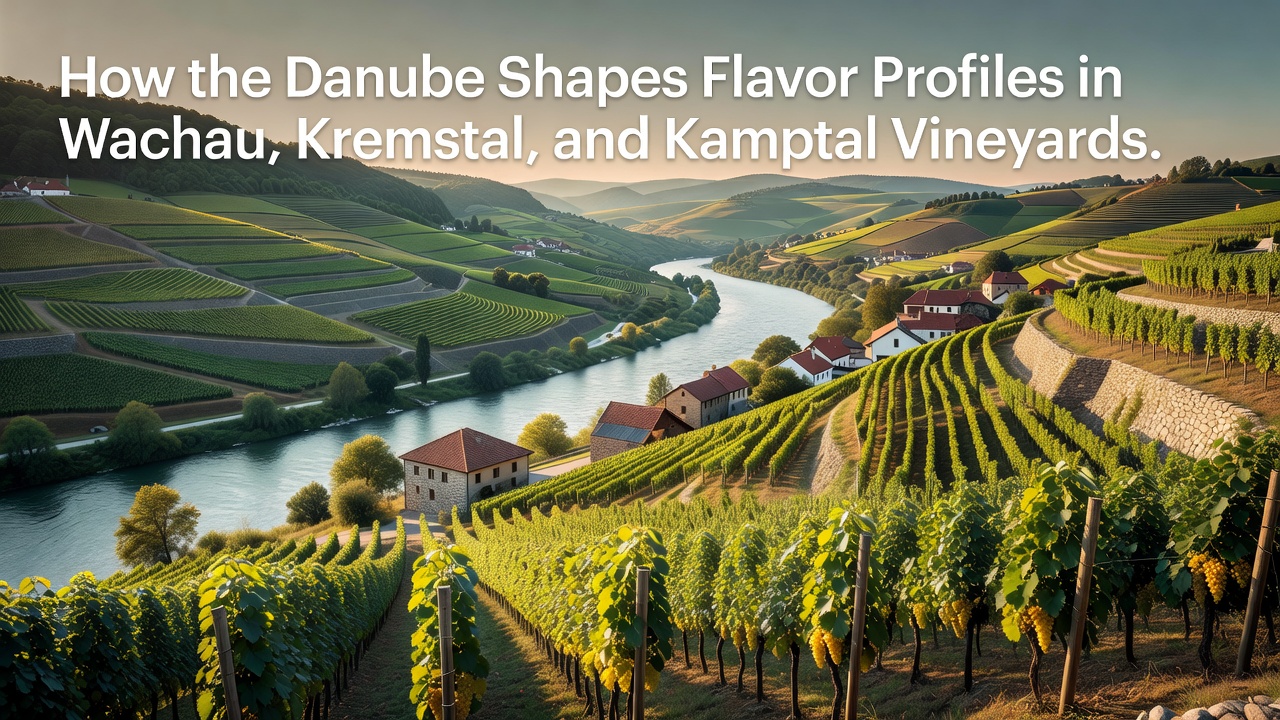
How the Danube Shapes Flavor Profiles in Wachau, Kremstal, and Kamptal Vineyards
The Danube River cuts through Lower Austria and creates distinct microclimates that influence grape ripening, acidity retention, and aromatic development across the Wachau, Kremstal, and Kamptal districts, according to data from the Austrian Wine Marketing Board. These three regions sit within a narrow corridor where the river moderates temperature swings, delivers consistent humidity, and interacts with varied bedrock and loess deposits.
Geographic and Climatic Framework
Researchers at the University of Natural Resources and Life Sciences in Vienna have documented how the river’s north-south bends generate different solar exposures and air drainage patterns, while the water body itself releases stored heat during cooler nights. In August 2026 vineyard crews across these districts will monitor veraison timing, which typically falls between mid-August and early September depending on proximity to the riverbanks. The resulting temperature buffering supports slower sugar accumulation and preserves higher natural acidity in both Grüner Veltliner and Riesling.
Wachau: Steep Terraces and Mineral Expression
Wachau vineyards occupy steep, south-facing terraces between Melk and Krems where the Danube narrows and the valley walls rise sharply. Granite and gneiss soils dominate the upper slopes, while lower terraces contain more loess and gravel. The combination produces wines with pronounced stone-fruit and herbal notes alongside a characteristic wet-stone minerality. Irrigation remains limited because the river’s proximity supplies enough atmospheric moisture to reduce vine stress during dry spells.
Kremstal: Broader Valley and Loess Influence
East of Wachau the valley opens in Kremstal, where thick loess layers overlie primary rock. The Danube still provides evening cooling but the broader topography allows slightly warmer daytime temperatures. Studies from the Federal College and Research Institute for Viticulture and Pomology in Klosterneuburg show that loess contributes to softer phenolic textures and subtle tropical fruit aromas in Grüner Veltliner, while Riesling from the higher granite sites retains the linear acidity typical of the broader region.
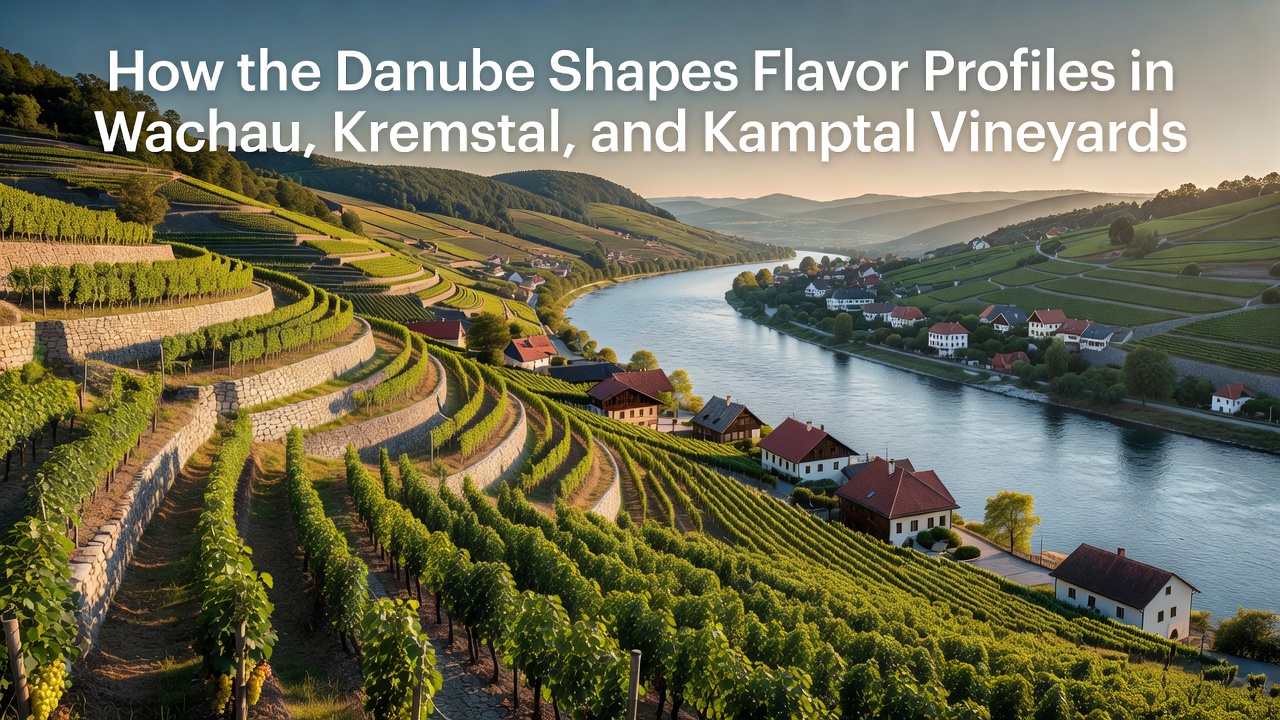
Kamptal: Northern Exposure and Wind Patterns
Kamptal lies north of the Danube where the river turns eastward and the Kamp tributary joins the main flow. Vineyards on the south-facing slopes receive steady sunlight, yet cool air from the Bohemian Massif flows down the valley at night. This diurnal swing, amplified by the Danube’s thermal mass, helps maintain elevated acidity levels. Observers note that Kamptal Rieslings often display pronounced citrus zest and floral elements, while Grüner Veltliner from loess sites shows white pepper and lentil character.
Soil-River Interactions and Flavor Compounds
Geological surveys indicate that loess deposits, carried and redeposited over millennia by both wind and the Danube, cover large portions of the lower terraces in all three regions. These fine-grained soils retain water efficiently yet drain well on slopes. Granite and gneiss outcrops, exposed on steeper inclines, contribute potassium and trace minerals that correlate with higher concentrations of monoterpenes responsible for citrus and stone-fruit aromas. The river’s humidity also encourages earlier morning mist, which can delay ripening slightly and extend the growing season.
Grape Varieties and Resulting Profiles
Grüner Veltliner occupies the largest area and responds strongly to the interplay of loess and river influence, developing white-pepper spice and orchard-fruit flavors when grown on deeper loess. Riesling, planted on the steeper, rocky sites, produces wines with elevated acidity and pronounced mineral notes. Both varieties benefit from the cool nights provided by the Danube corridor, which slows malic acid degradation and preserves freshness.
Regulatory Designations and Quality Categories
The EU-protected designations of origin for Wachau, Kremstal, and Kamptal require specific yield limits and minimum ripeness levels that reflect the river’s climatic effects. Producers must follow harvest regulations tied to must-weight thresholds, which the river’s moderating influence helps meet consistently across vintages. Data compiled by the Austrian Wine Marketing Board shows that these three regions together account for a substantial share of Austria’s premium white wine exports.
Conclusion
The Danube’s presence creates a connected yet varied terroir system across Wachau, Kremstal, and Kamptal. Temperature moderation, soil moisture dynamics, and geological diversity combine to shape acidity, aromatic intensity, and texture in the resulting wines. Ongoing monitoring by regional research institutes continues to quantify these relationships as climate patterns evolve.